Kaskal Co., Ltd. | Samut Prakan, Thailand (July 2024 – Present)
Promoted to Senior Structural Engineer in July 2026
Commercial Curtain Wall, Glass & Anchorage Structural Engineering
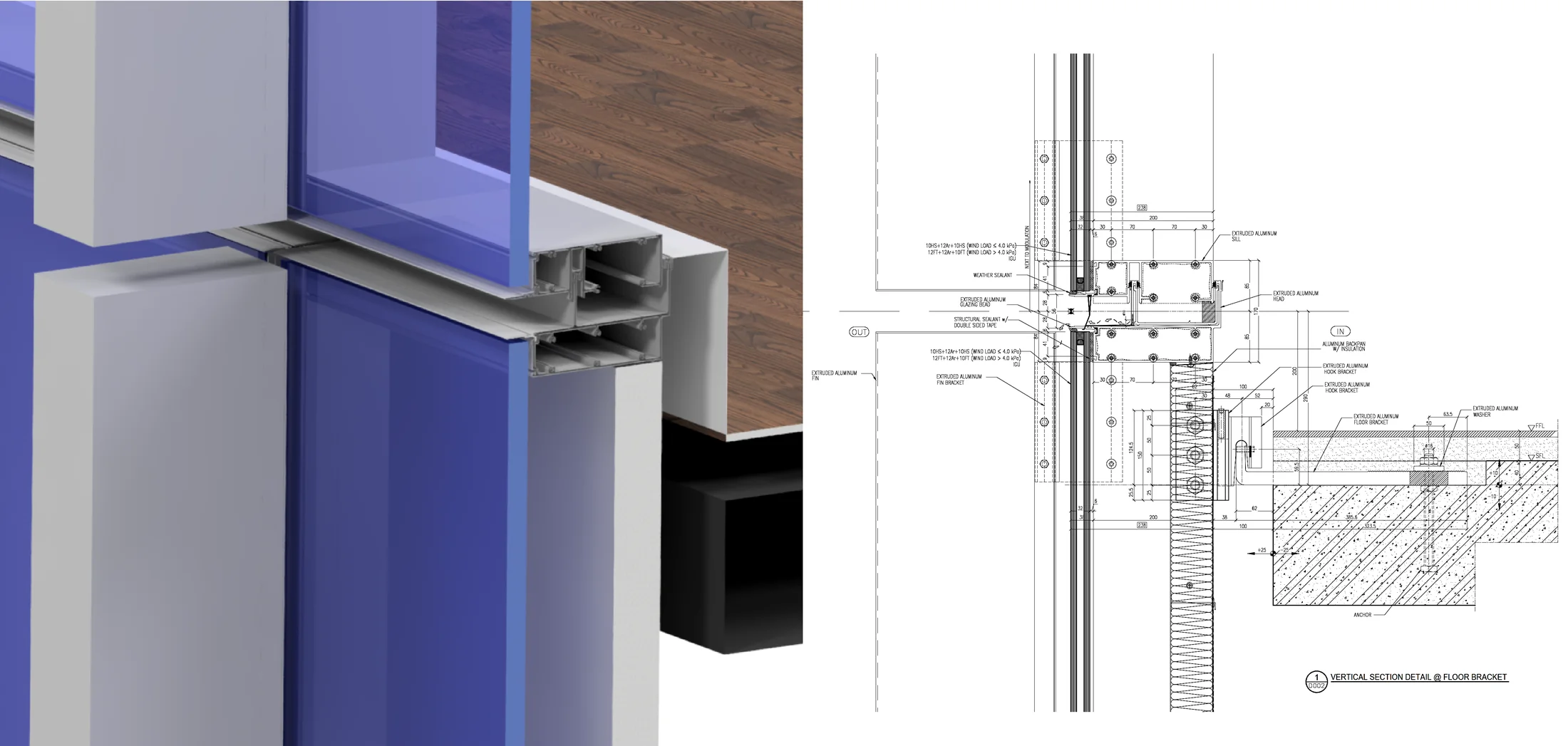
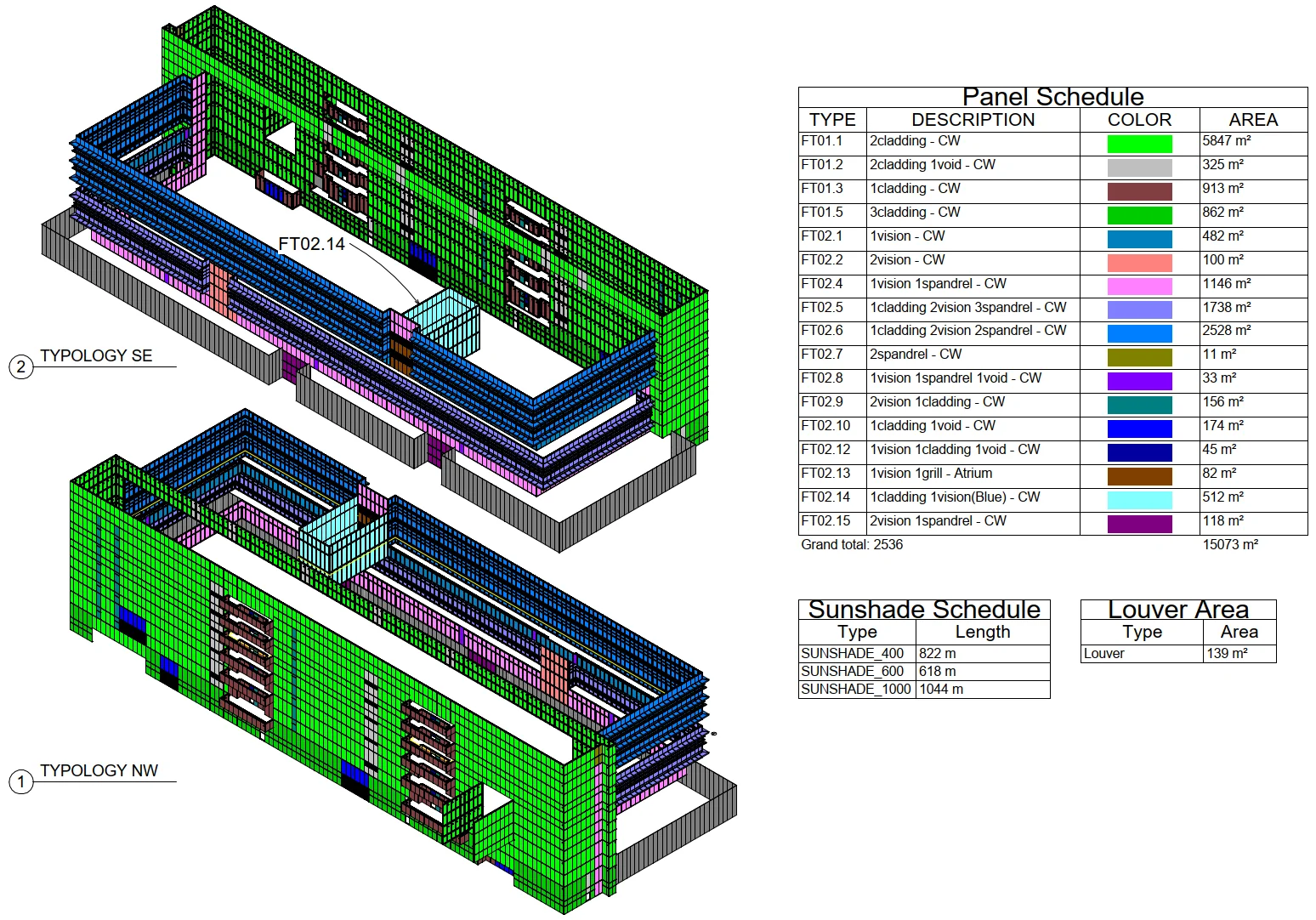
Comprehensive structural design, finite element analysis (FEA), and statutory compliance checking for high-rise commercial curtain walls, bespoke aluminum profiles, glass panels, steel support brackets, and concrete anchorages.
Systems Engineered
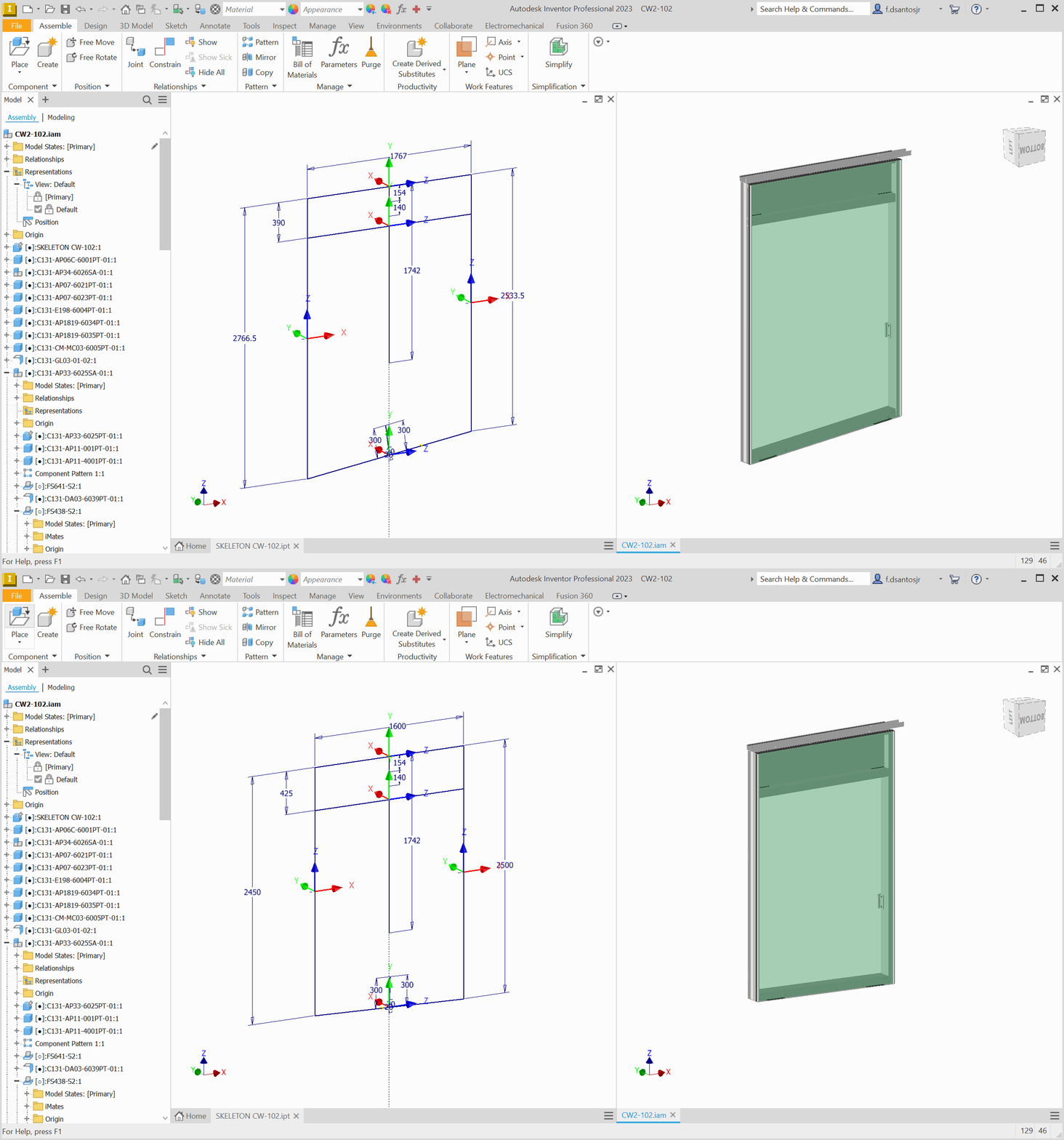
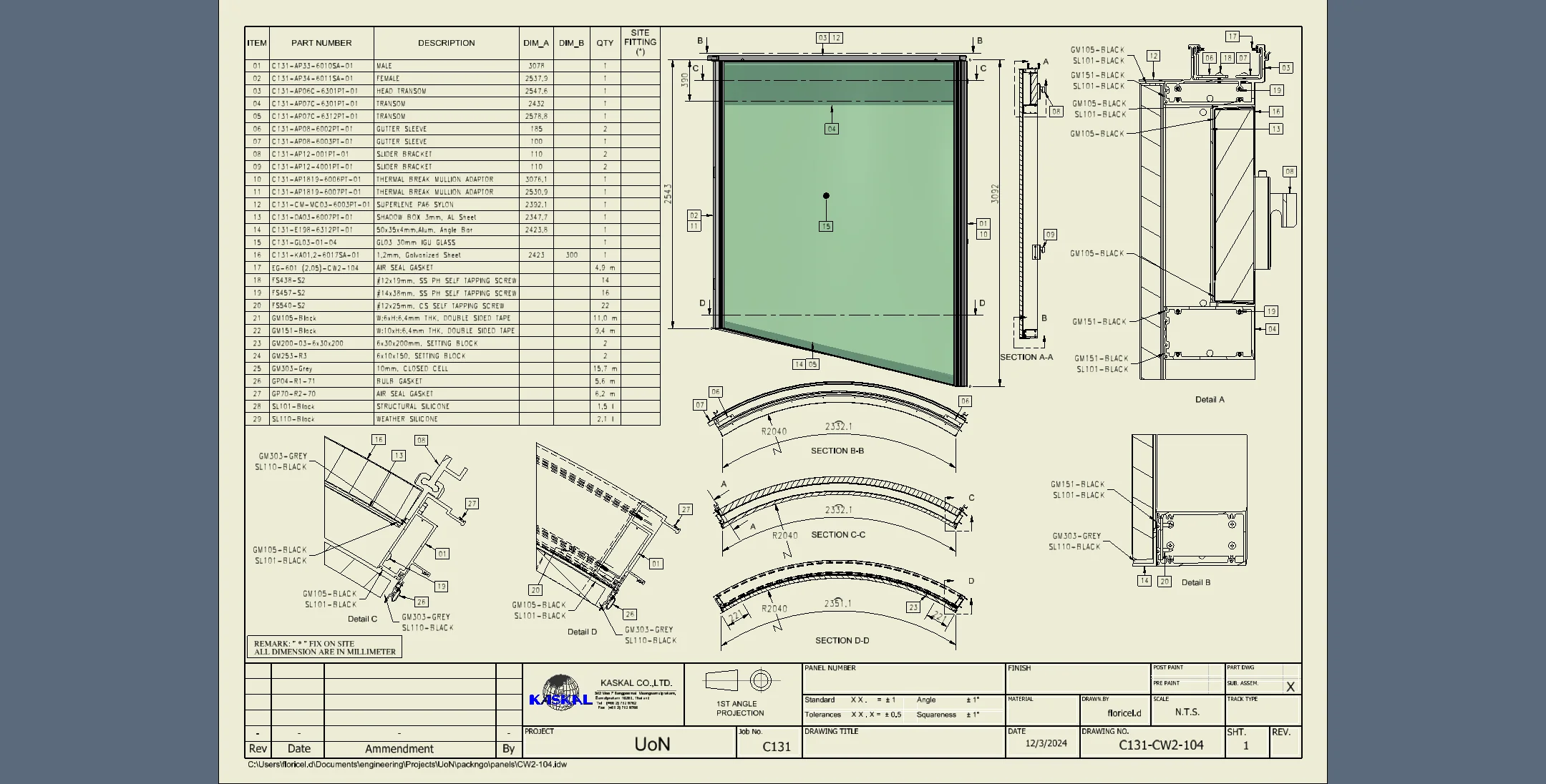
Unitized, Stick, Semi-Unitized
FEA Solvers
Strand 7 & Inventor Nastran
Glass Verification
SJ Mepla & ASTM E1300
Anchor Standard
ACI 318 Ch. 17 / EN 1992-4
- Aluminum Curtain Wall Framing: Designed stick, unitized, and semi-unitized aluminum curtain wall framing to AA ADM (Aluminum Design Manual), checking deflection and stress limits.
- Steel Brackets & Wind Loads: Designed steel bracket supports to AISC 360 to transfer façade loads to the main structure, with wind loads per ASCE 7 and Thai standards.
- Structural Glass Analysis: Analysed insulated (IGU), curved, and large-deflection (non-linear) glass using ASTM E1300 and SJ Mepla.
- Structural Silicone Glazing (SSG): Sized structural silicone glazing (SSG) joints and bite depth to ASTM C1401.
- Concrete Anchorage & Fasteners: Designed cast-in channels and post-installed anchors to ACI 318 Chapter 17 and EN 1992-4, and checked thermal-break screw connections to AAMA TIR-A9.
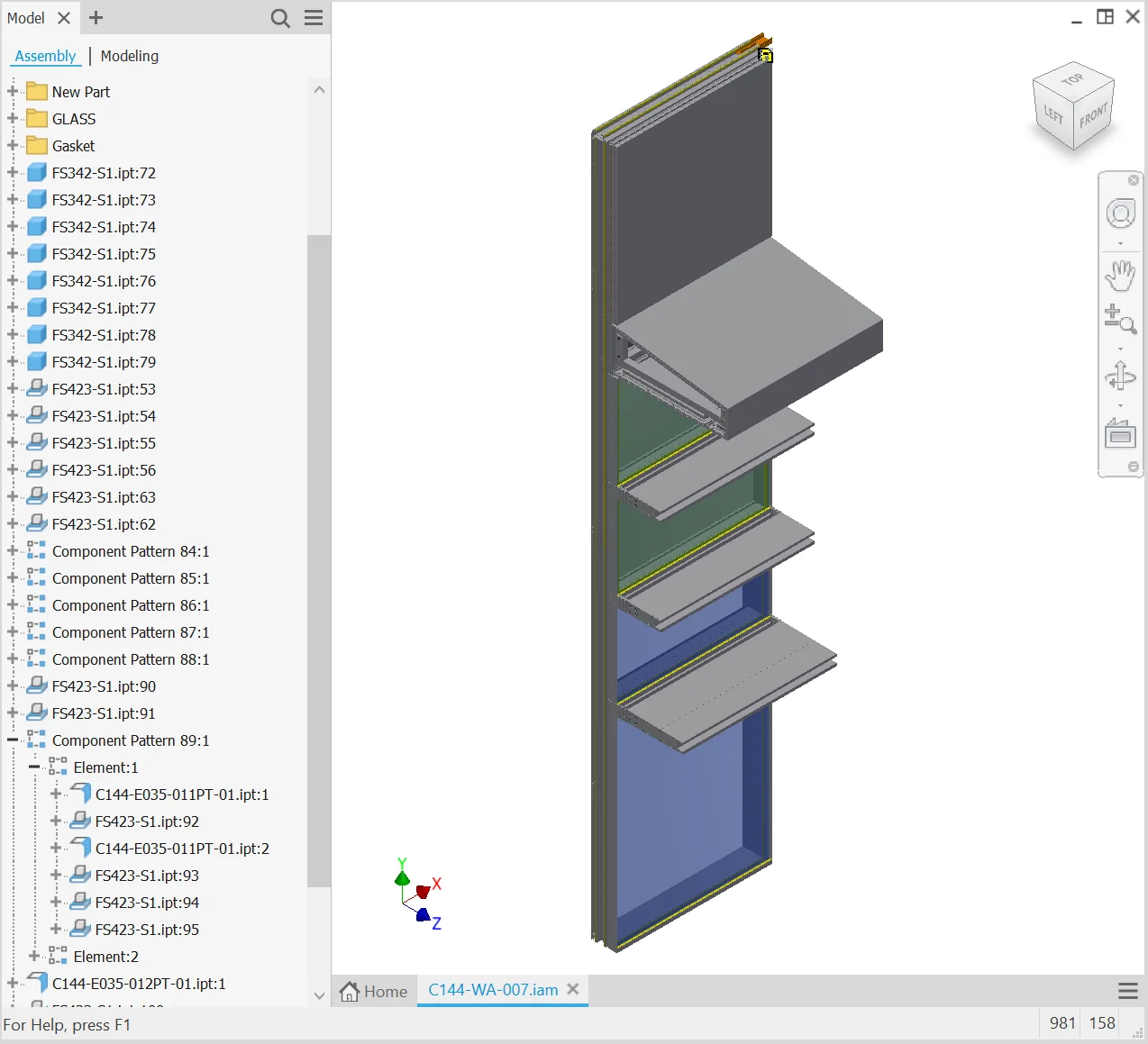
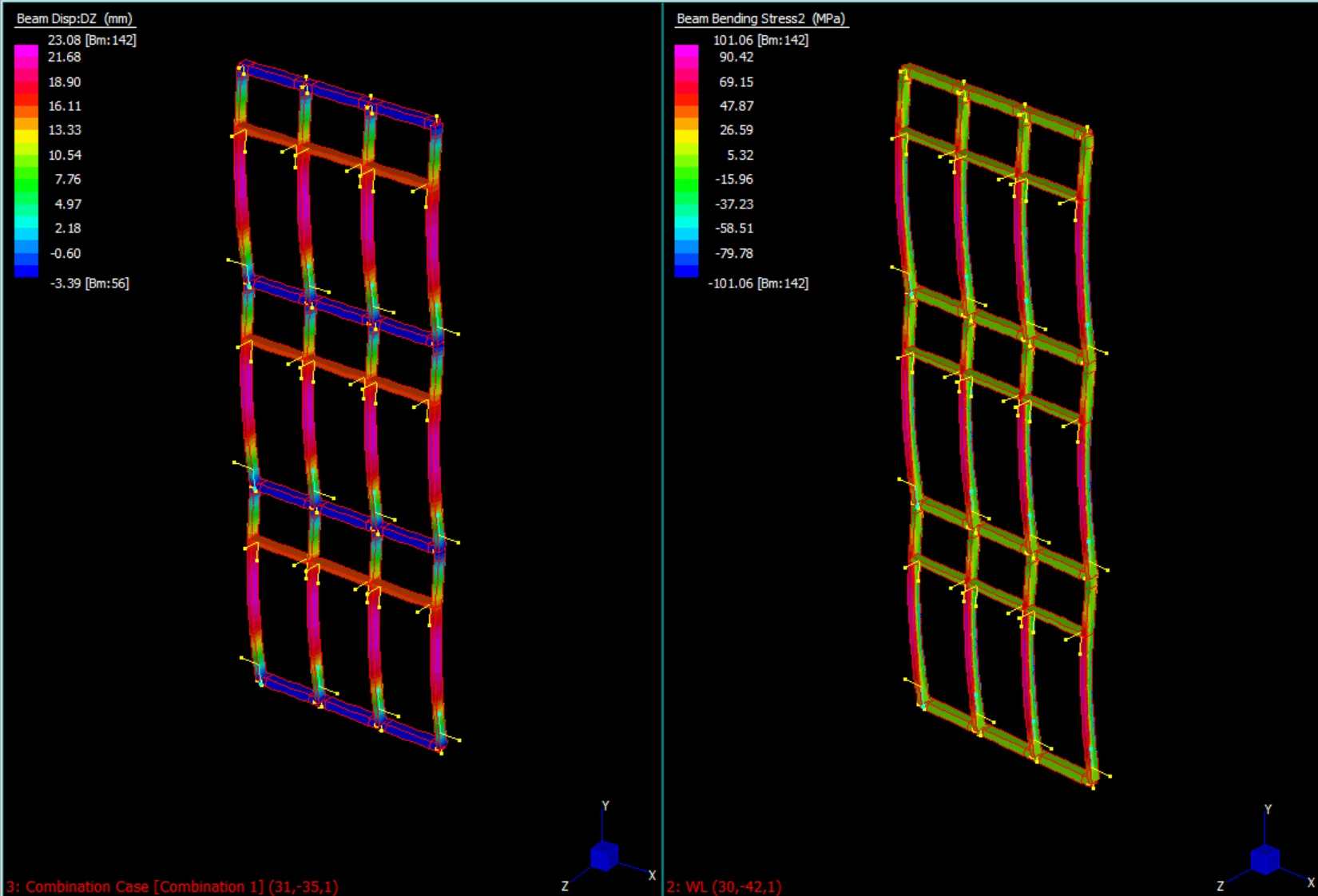
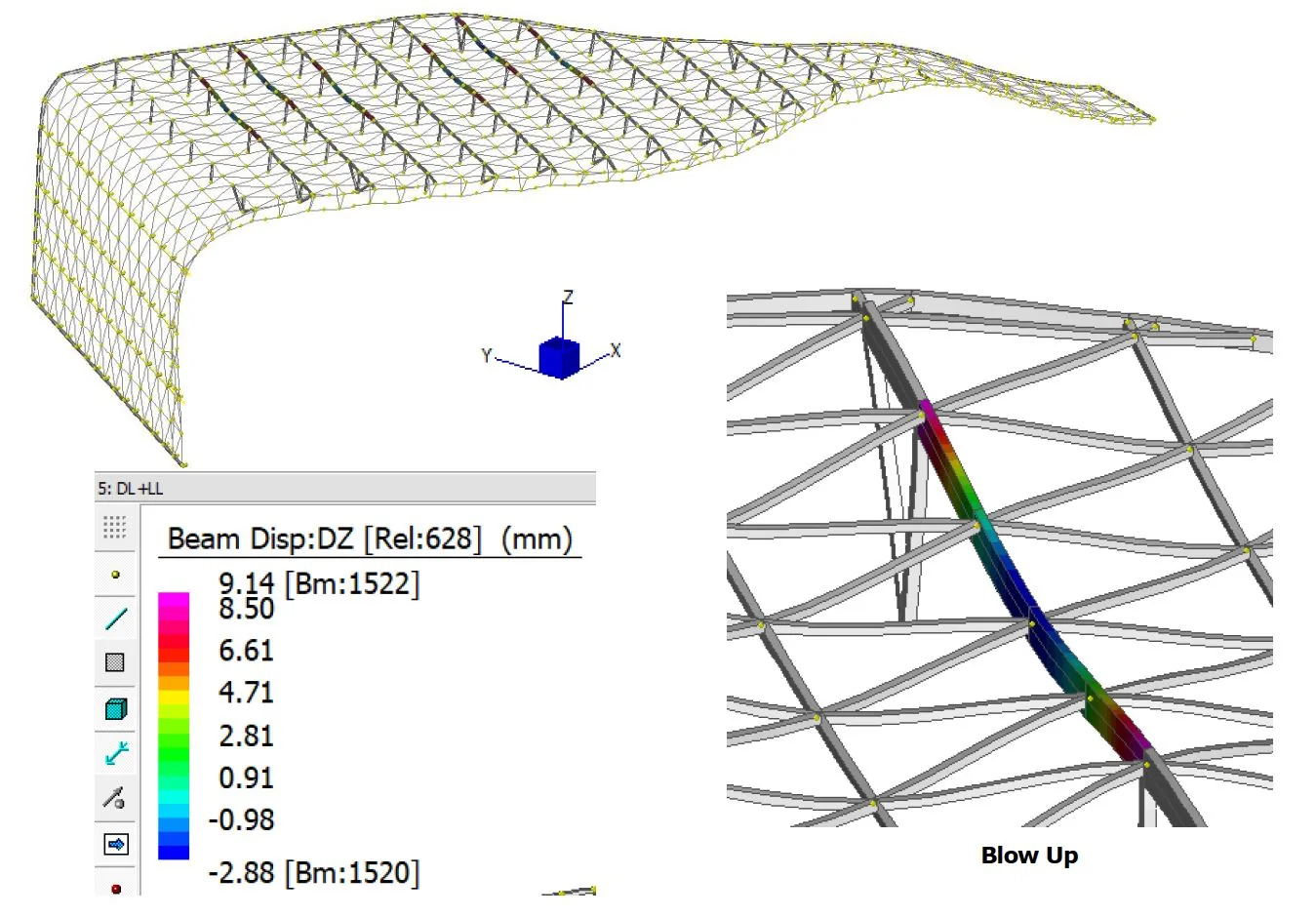
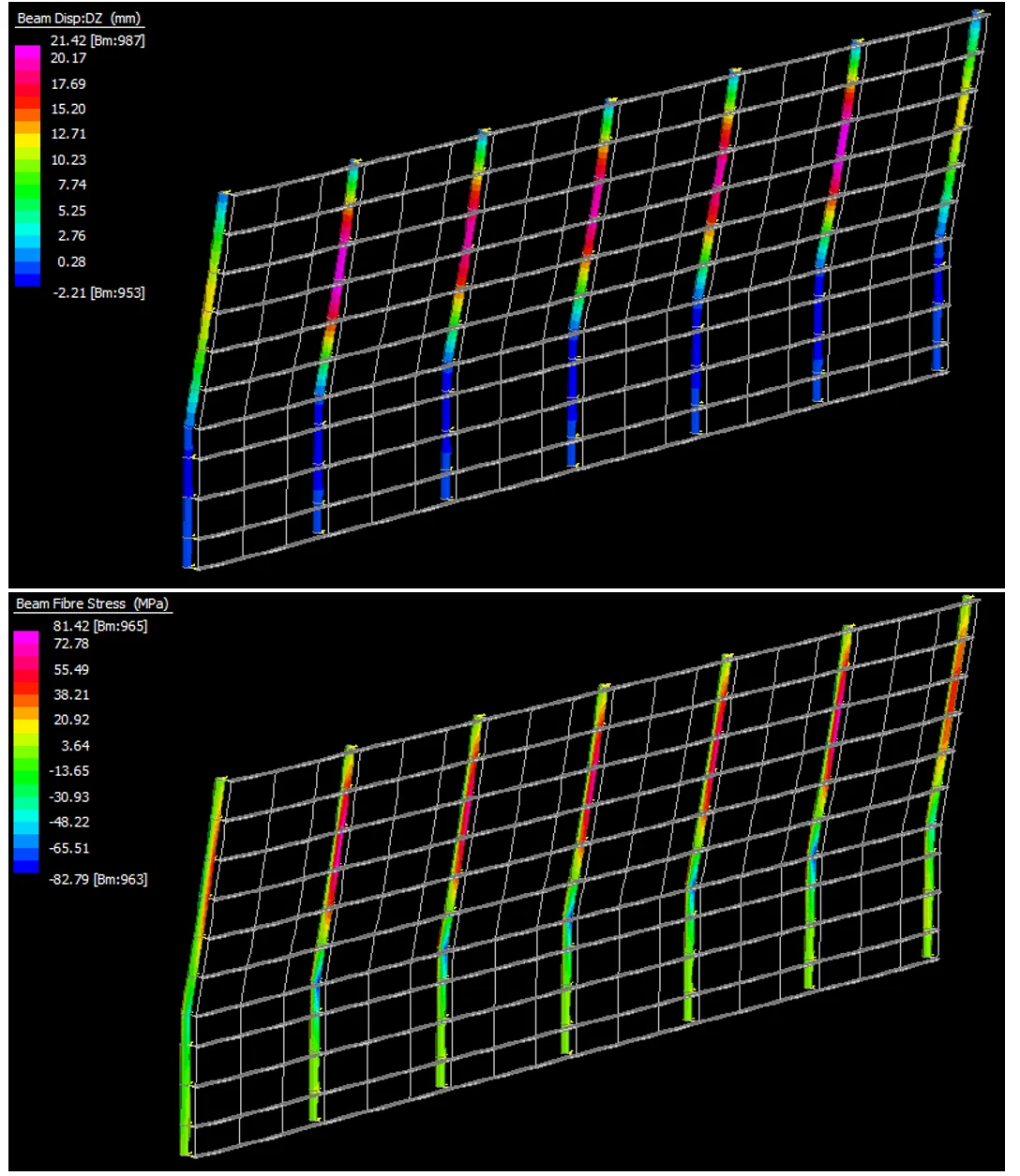
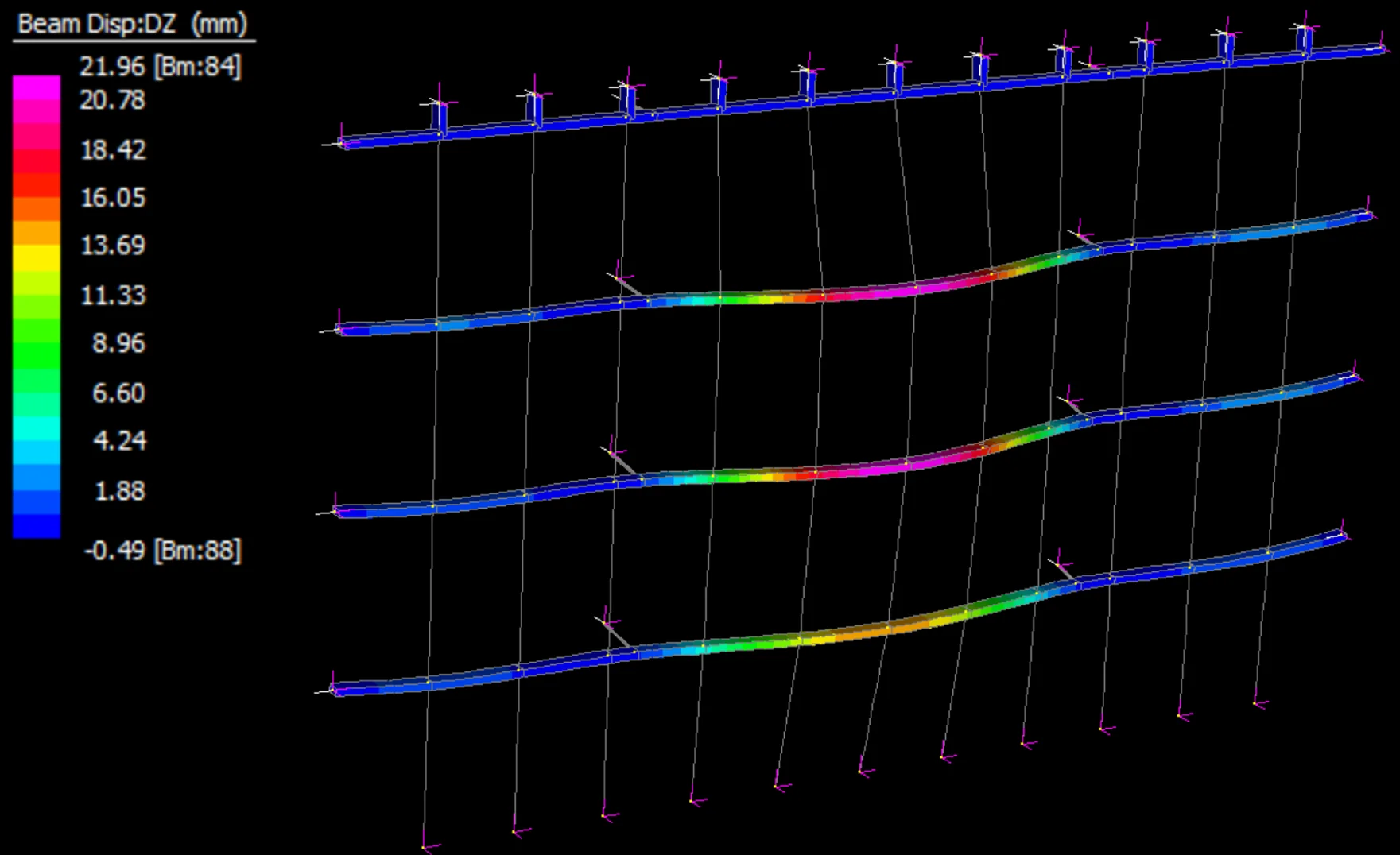
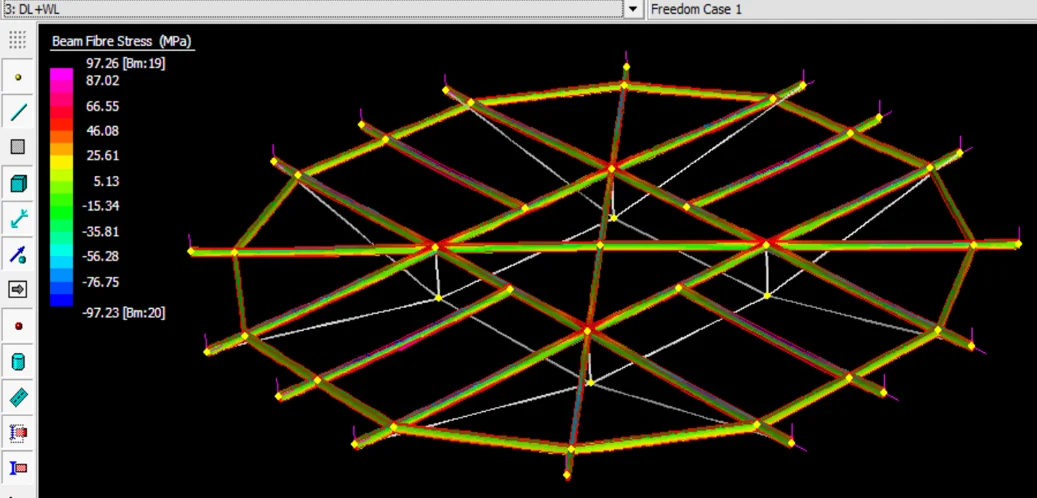
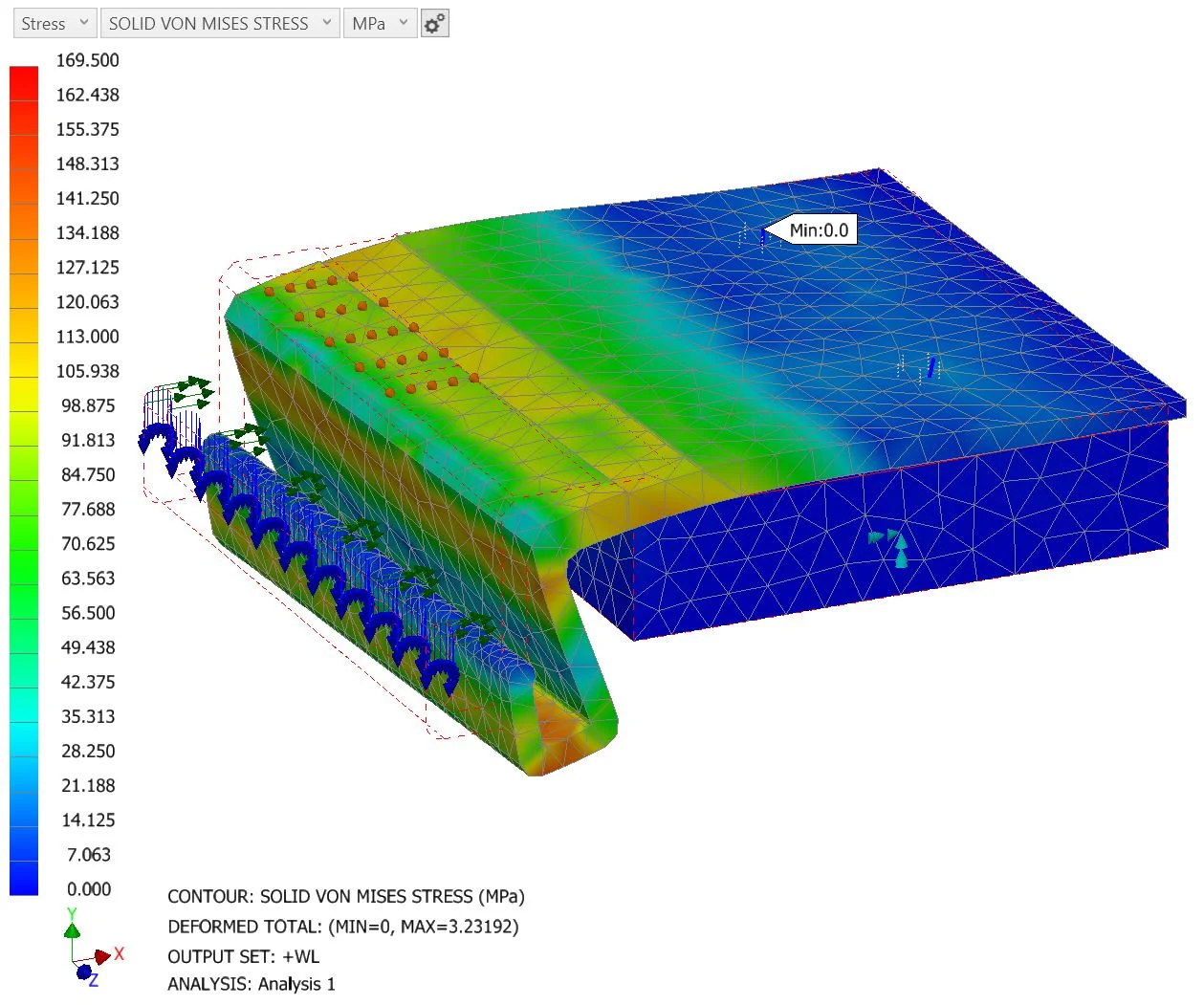
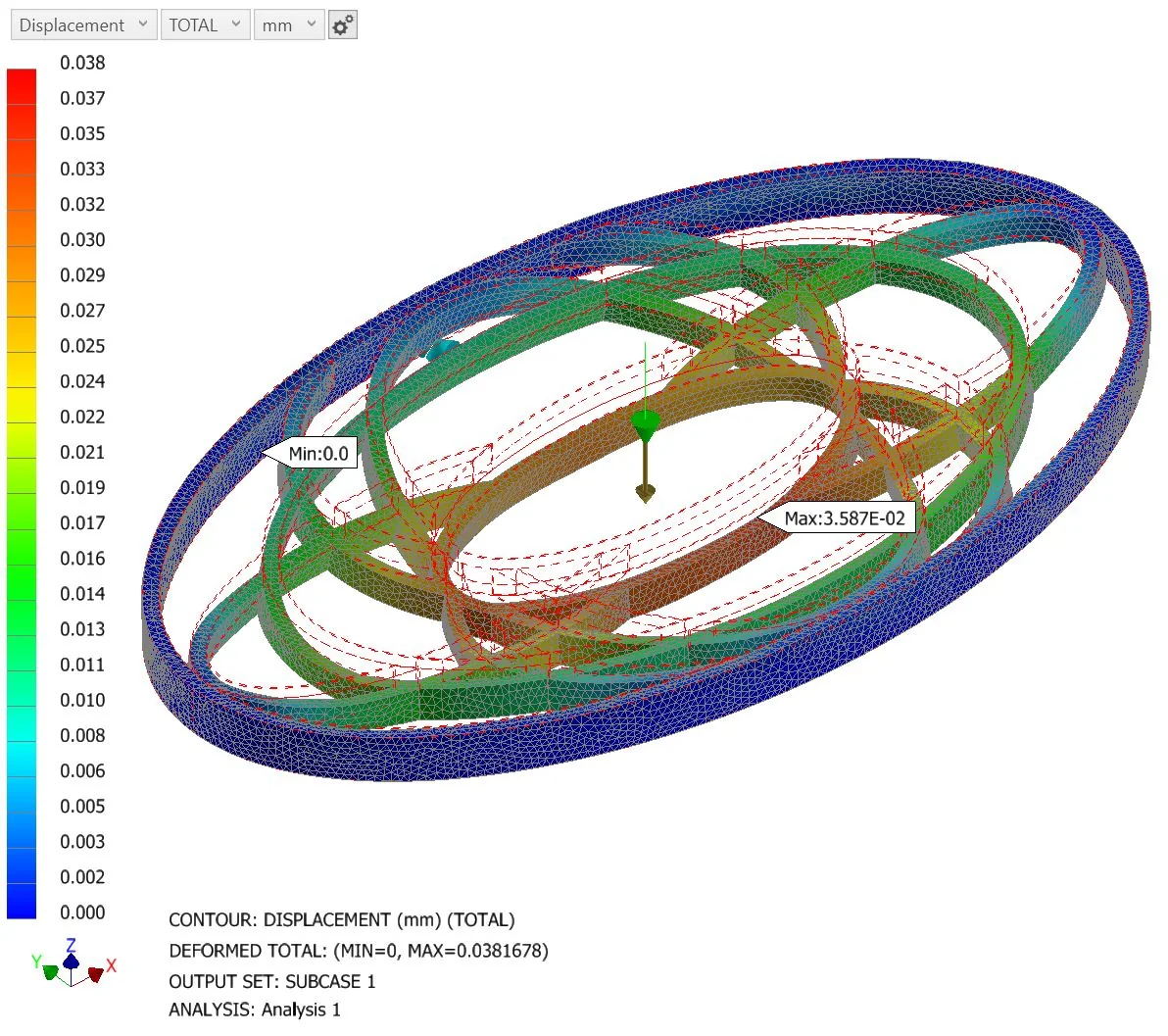
- FEA Profile & Bracket Optimization: Used Strand 7 and Autodesk Inventor Nastran FEA to optimise custom aluminum brackets and cladding panels, reducing extrusion weight while meeting required safety factors.
- Peer Review & Supervision: Supervised junior structural engineers and checked their calculation reports before submission to clients, main contractors, and consultants.
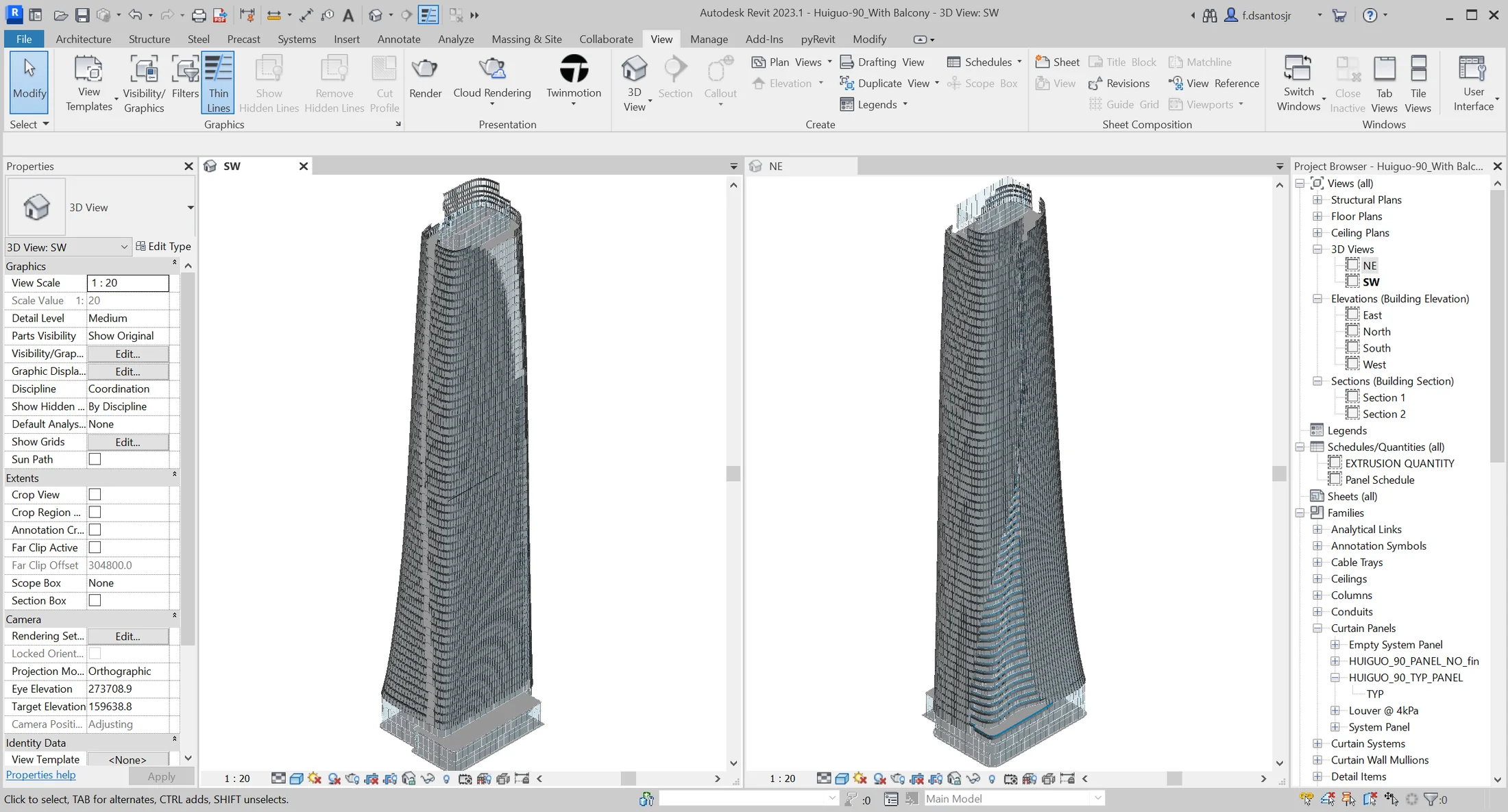
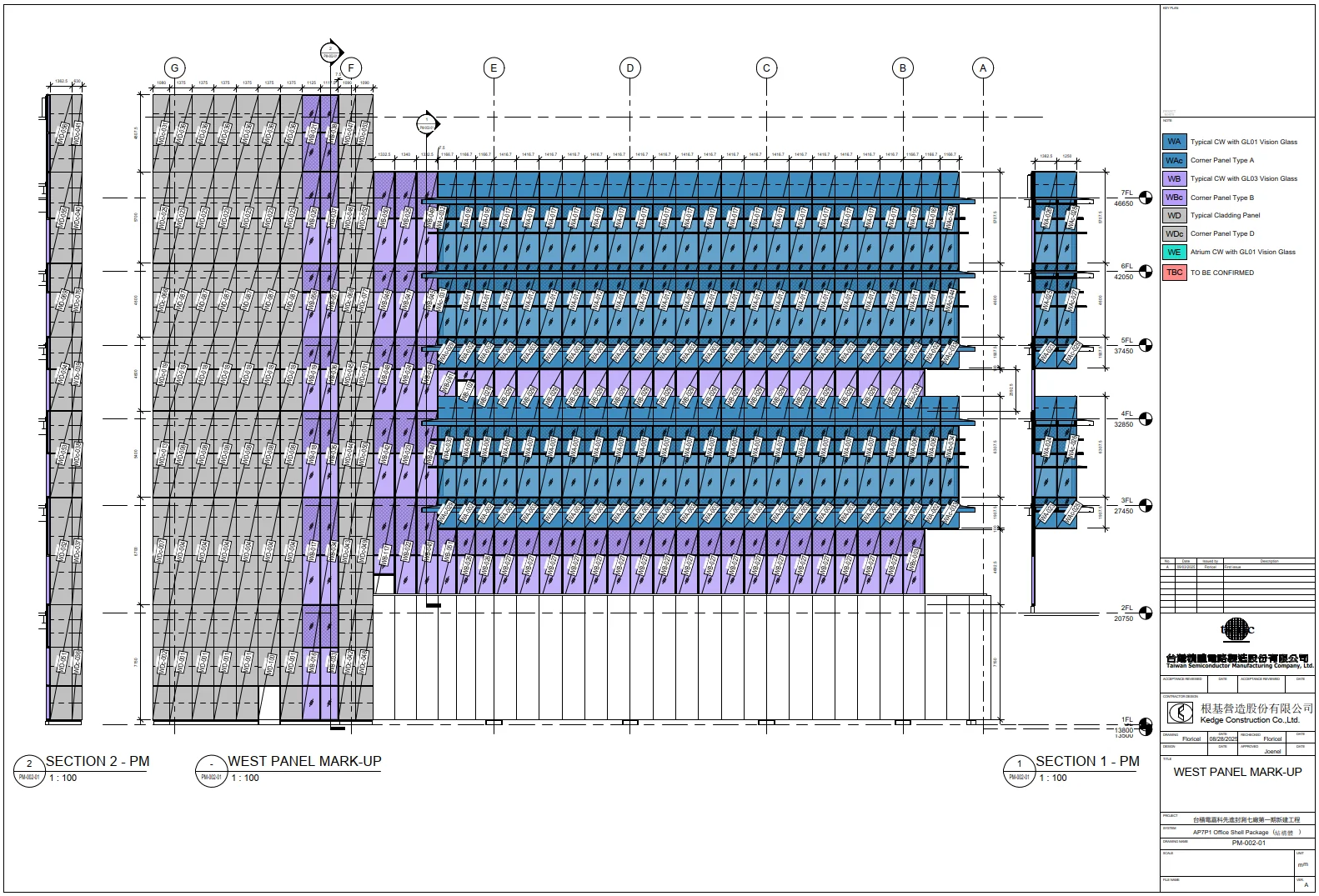
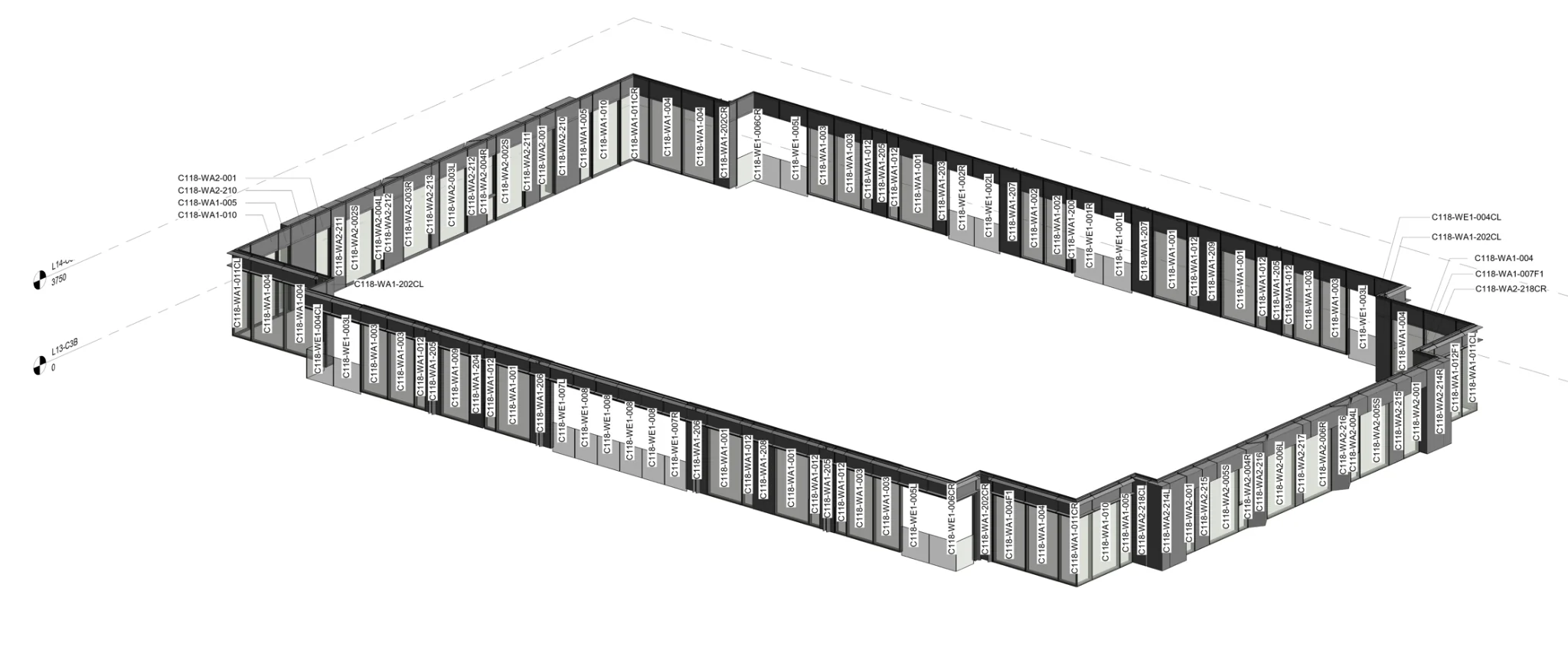
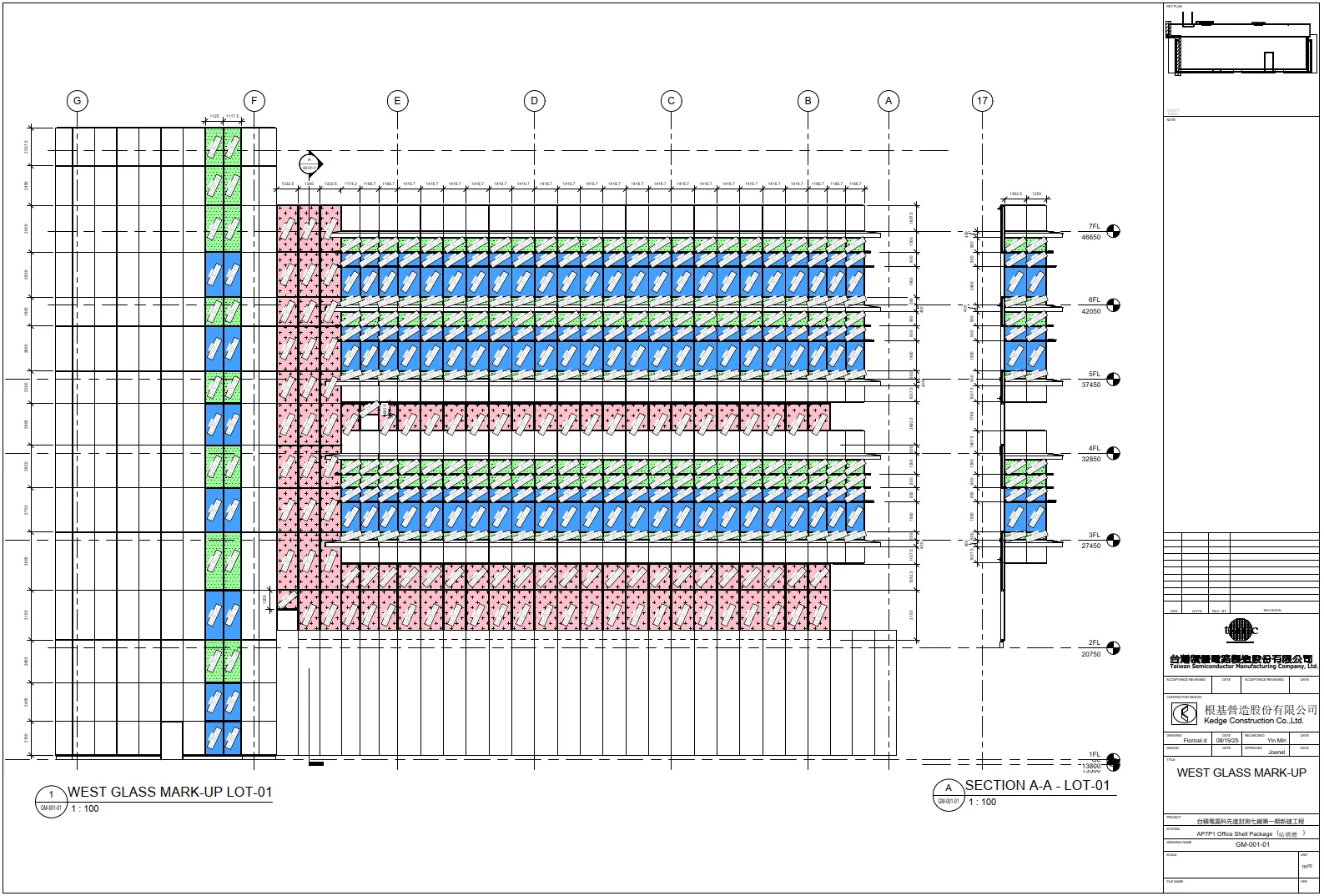
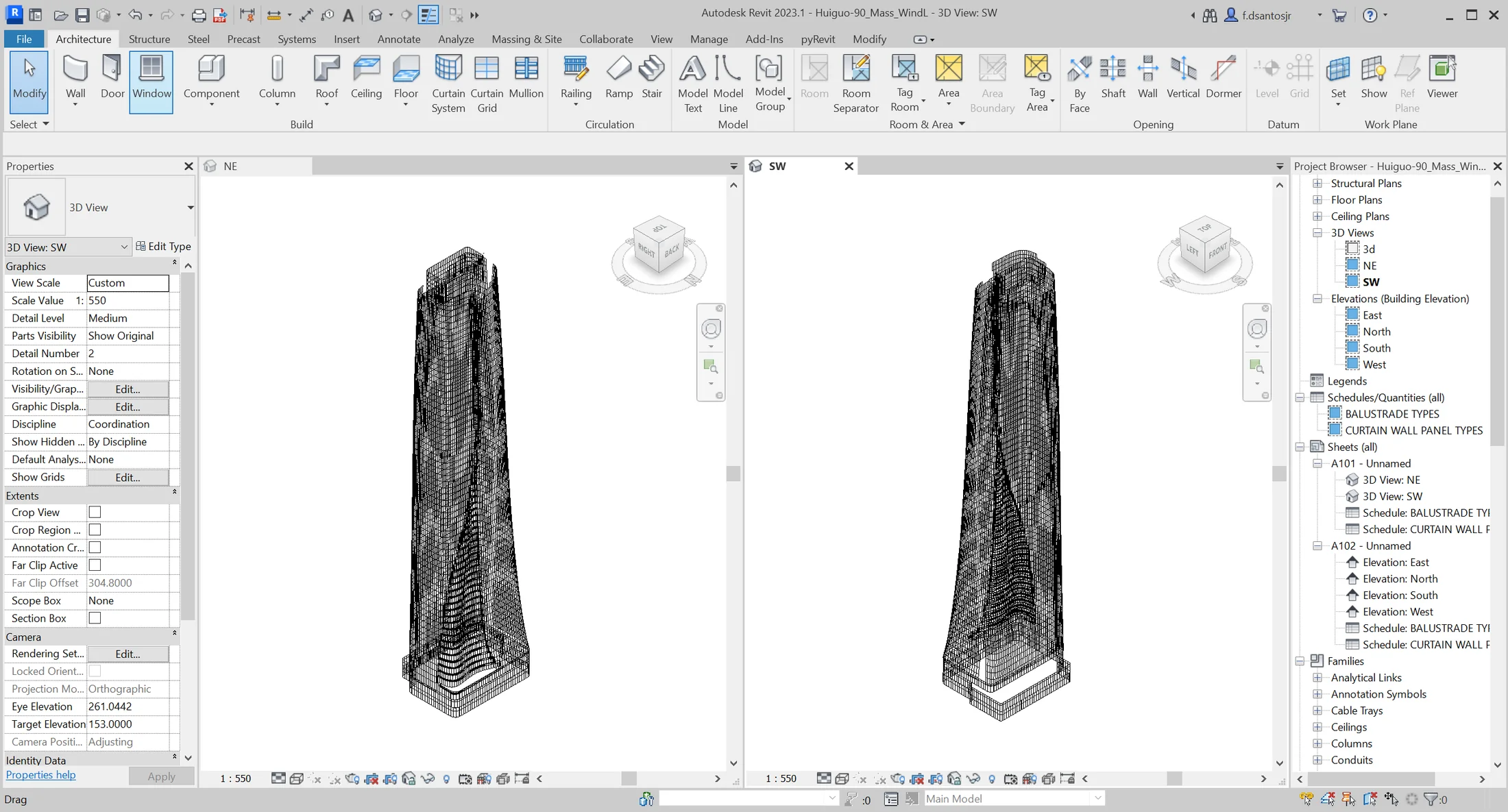
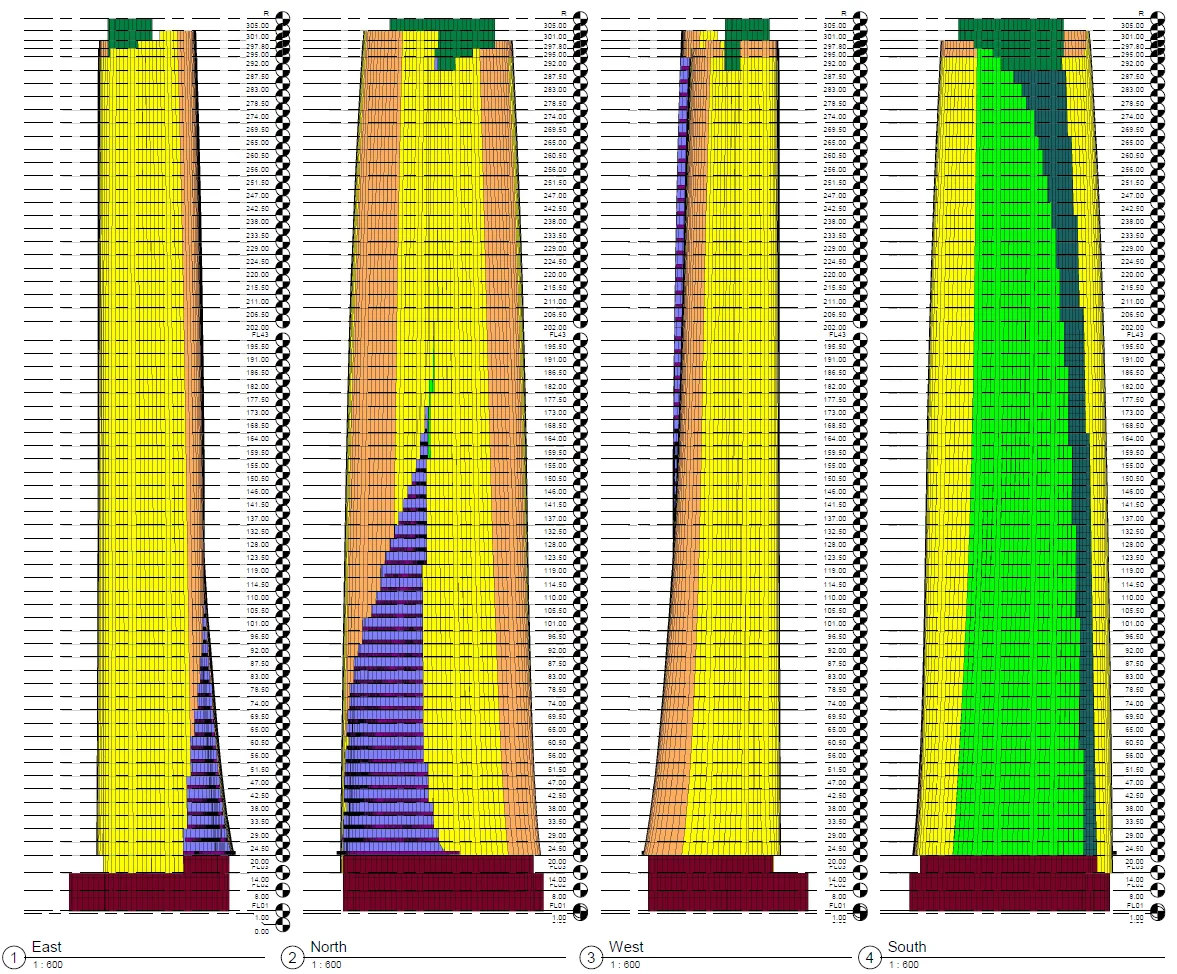
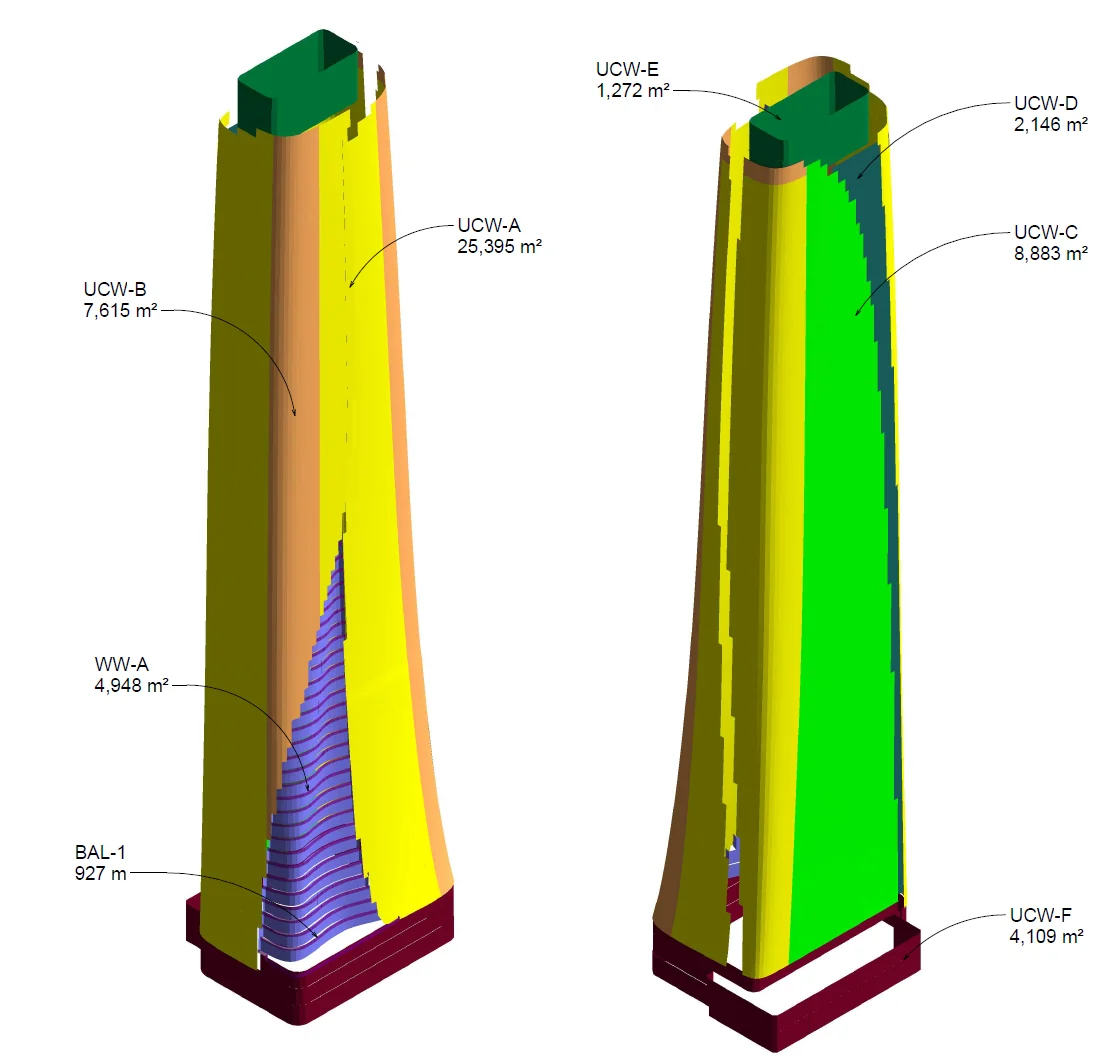
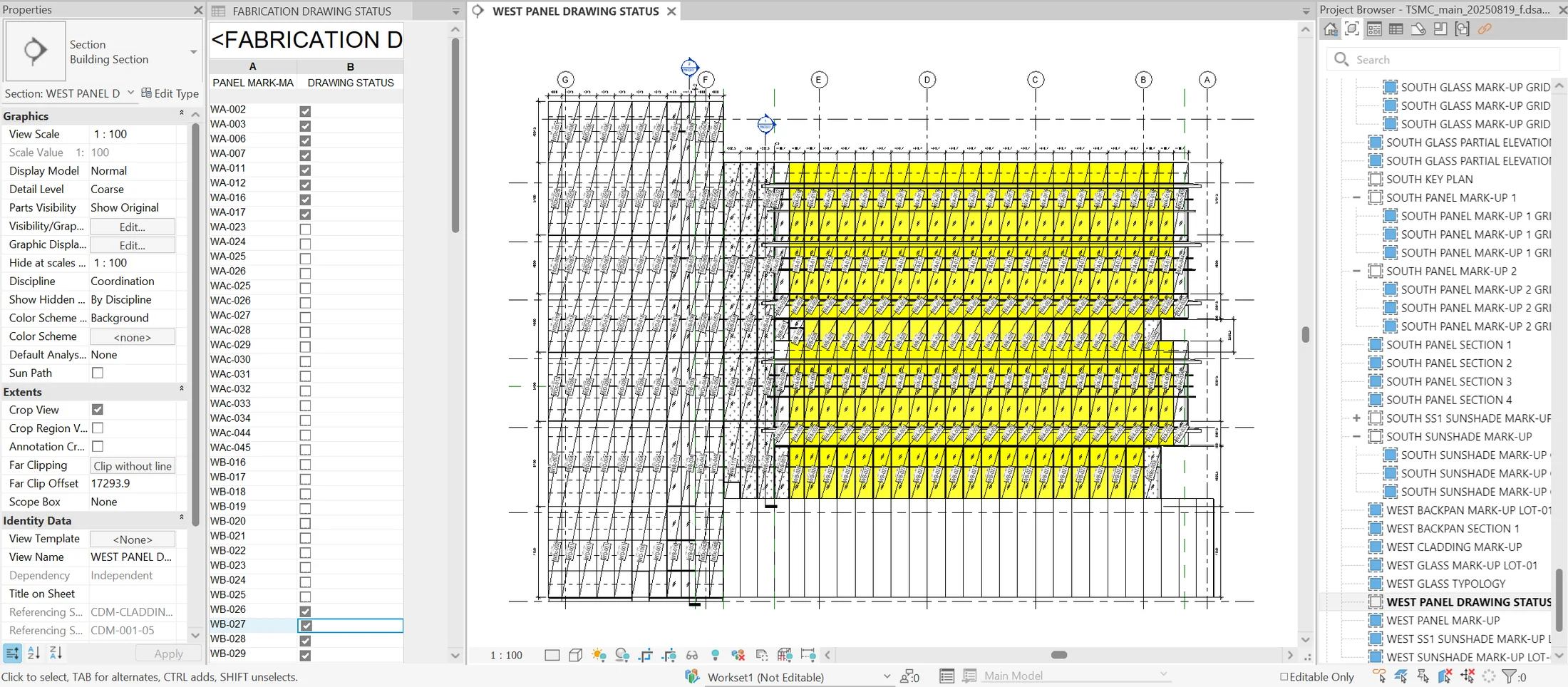
Curtain Wall, Glass & Anchorage FEA — Project Visual Gallery
🔍 Click to Inspect
#1
 #2
 #3
 #4
 #5
 #6
 #7
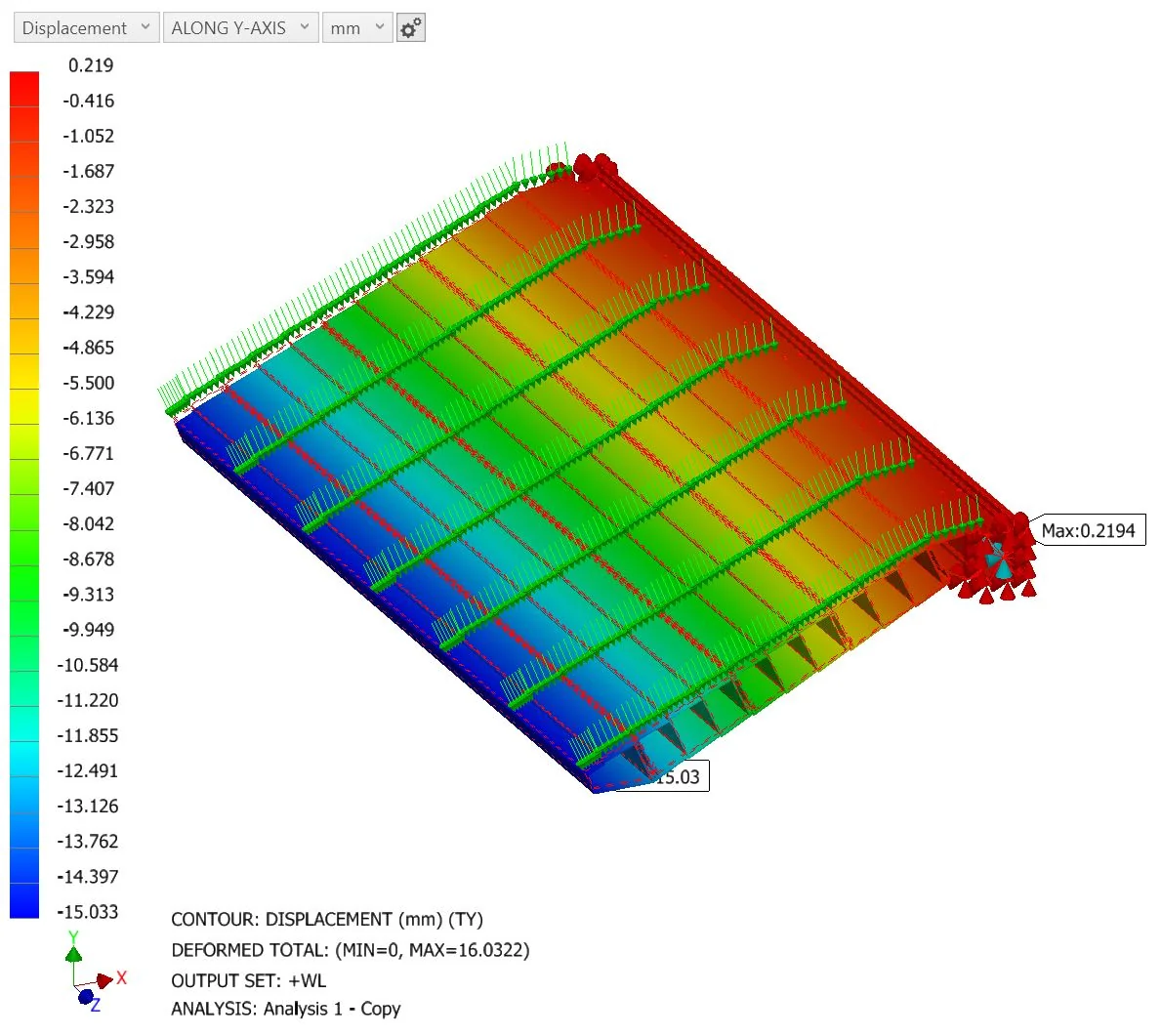 #8
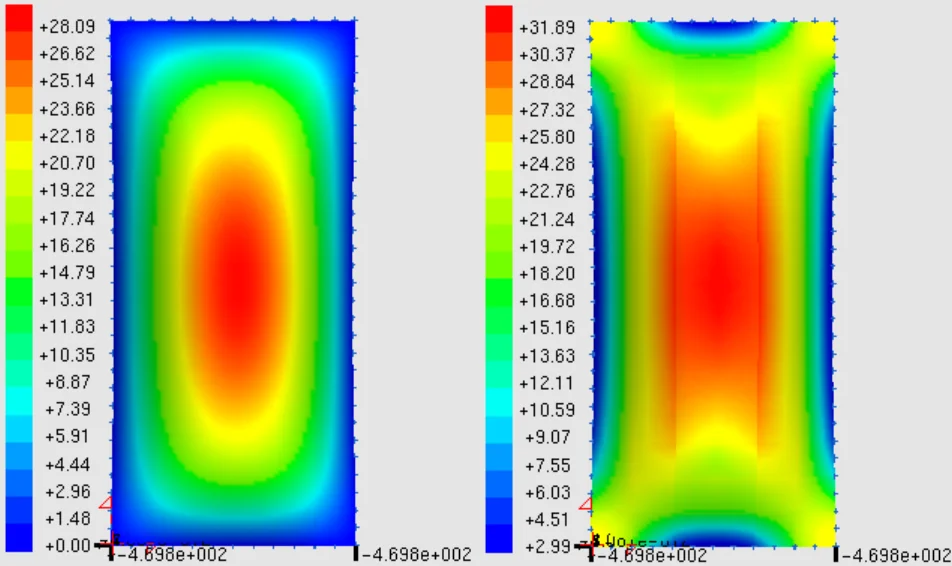 #9
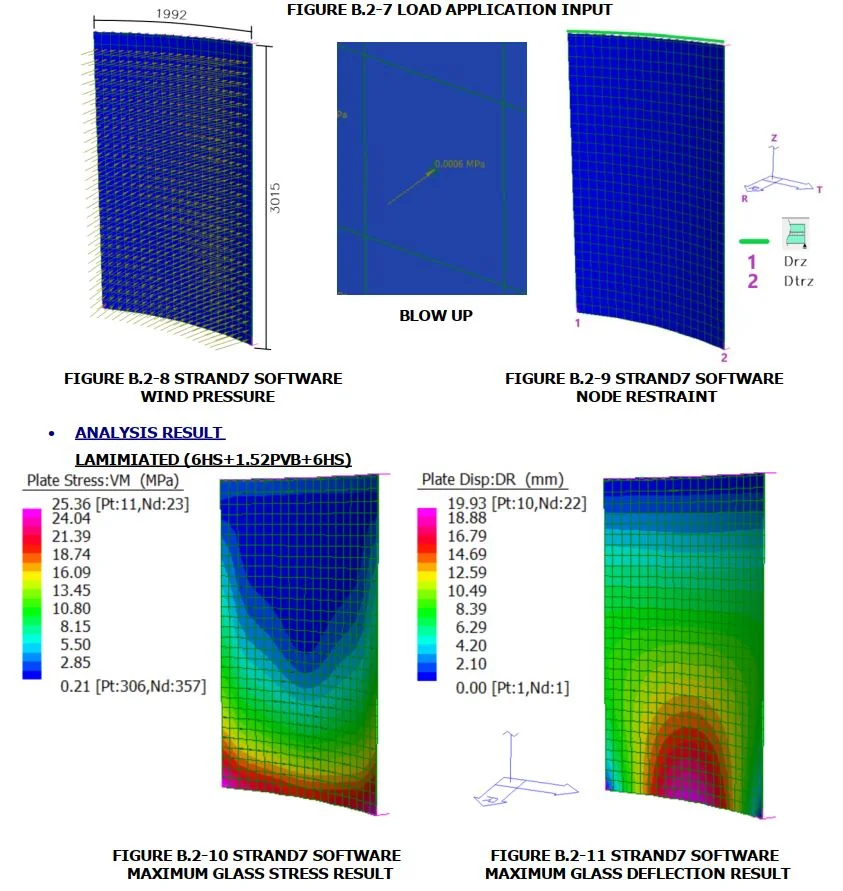 #10
Unitized Curtain Wall Engineering Calculation Package
Allowable Stress Design (ASD) — Service Wind Load • Commercial Office Headquarters — Unitized Curtain Wall, Bangkok, Thailand
ASD Wind Load Basis
Unitized Curtain Wall Engineering Calculation Package
Allowable Stress Design (ASD) — Service Wind Load • Commercial Office Headquarters — Unitized Curtain Wall, Bangkok, Thailand
Design Basis & Method: Allowable Stress Design (ASD) — Service Wind Load | NZ Alignment: NZ practice: limit-state design to AS/NZS 1170.2, AS/NZS 1664.1, NZS 4223
Governing Codes: AA ADM 2005 (Aluminum Allowable Stress Design), ASTM E1300-02/-16 (Glass Plate Large Deflection Analysis), ASTM C1401 (Structural Sealant Glazing Sizing), AAMA TIR-A9 (Fastener Group Shear Transfer in Aluminum), EN 1992-4 / ETAG 001 (Cast-In Channel Embedment)
Design Pressures: 1.25 kPa (Panel Type A Vision & Spandrel), 1.00 kPa (Panel Type B)
Deflection Criteria: Mullion & Transom normal to wall: Δ ≤ L/175; Glass Lite: min(L/90, 20mm) = 26.15mm; Transom Dead-Load Sag: min(L/300, 3.0mm) = 3.00mm
Software Solvers: Strand7 (Non-linear 2D plate & 3D frame FEA), PTC Mathcad 15, Halfen HTA 2.98
Structural Load Transfer Path (Wind & Gravity Actions)
Step 1
Design Wind Pressure (1.25 kPa)
Local wind tunnel peak positive and negative surface pressures applied across curtain wall envelope.
Step 2
IGU Glazing Lites (6HS+1.52PVB+6HS / 8HS)
ASTM E1300 non-linear 2D plate flexure transferring lateral surface loads to continuous boundary perimeter.
Step 3
Structural Silicone Glazing (SSG) Bite (14.5 mm)
ASTM C1401 dynamic tension and direct shear transfer bonding glass panes to extruded aluminium sub-frames.
Step 4
Horizontal Extruded Transoms (6063-T6)
Bi-axial flexure resisting normal wind pressures and vertical dead-load glass weight bending.
Step 5
Split Aluminium Mullions (6063-T6)
Span-length combined flexure and axial tension/compression spanning between primary structural floor slabs.
Step 6
Heavy Extruded Slab Brackets (6063-T6)
Custom hook-and-bolt interface transferring mullion end shears into dead-load and wind-load reactions.
Step 7
Cast-in Channel Anchors (Halfen HTA-CE 40/22P)
3-anchor cast-in channel embedment resisting combined tension pull-out and perpendicular slab edge shear.
Step 8
Reinforced Concrete Floor Slab Edge
Structural diaphragm resisting global windward thrust and leeward suction reactions.
Governing Structural Utilization Matrix (Curated 11 Governing Checks)
| # | Structural Element & Component | Governing Verification Criteria | Actual / Demand | Allowable / Capacity | Utilization (DCR) | Status |
|---|---|---|---|---|---|---|
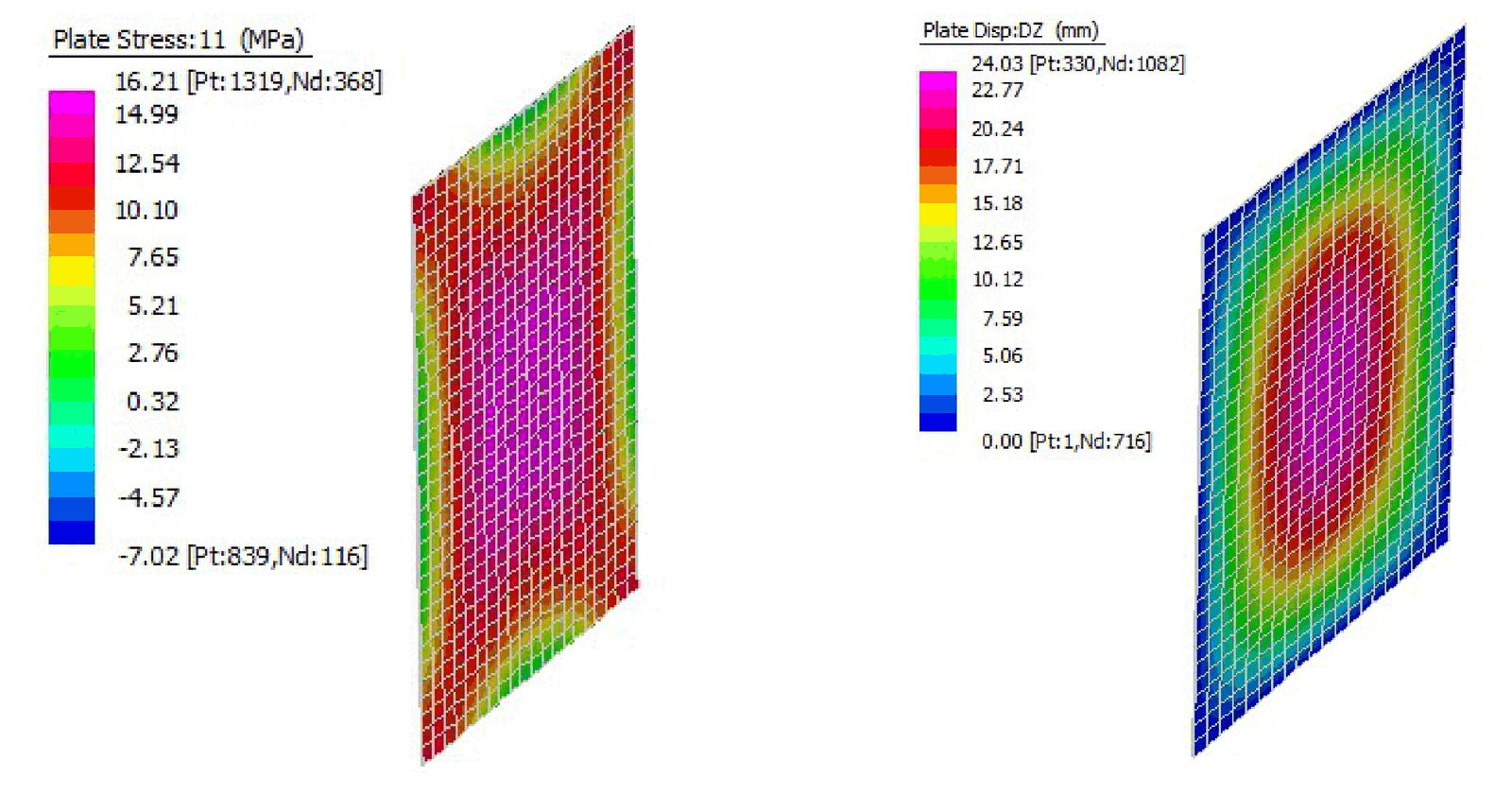
| 1 | Glass Outer Lite (Laminated) | Non-linear large deflection (ASTM E1300) | 24.03 mm | 26.15 mm | PASS | |
| 2 | Glass Outer Lite (Laminated) | Maximum surface tensile stress (HS glass) | 16.16 MPa | 46.60 MPa | PASS | |
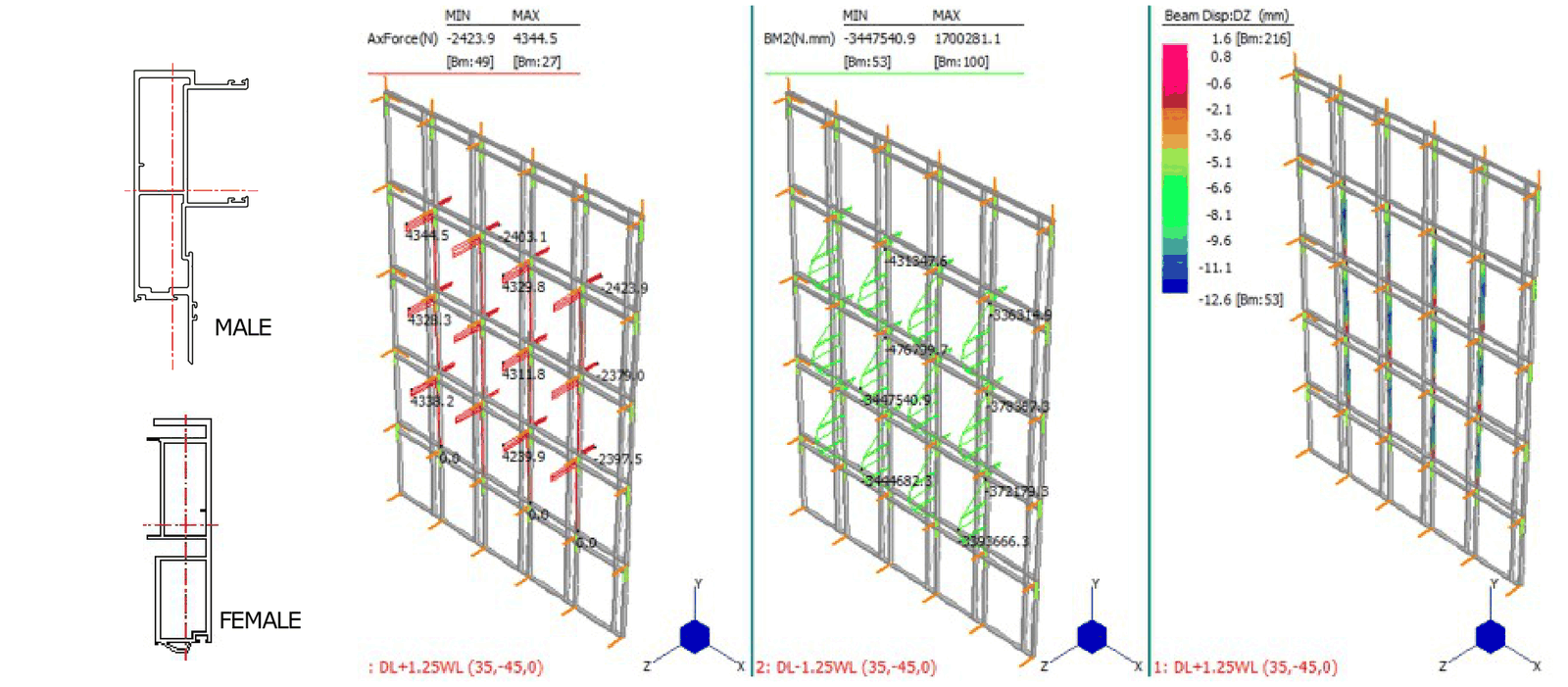
| 3 | Male Split Mullion | Combined bending & axial tension (AA ADM Sec. 3.4) | 53.59 MPa | 61.49 MPa | PASS | |
| 4 | Intermediate Mullion | Combined bending & axial tension | Combined stress check | Allowable stress limit | PASS | |
| 5 | Intermediate Mullion | Wind load lateral deflection (≤ L/175) | 19.70 mm | 25.10 mm | PASS | |
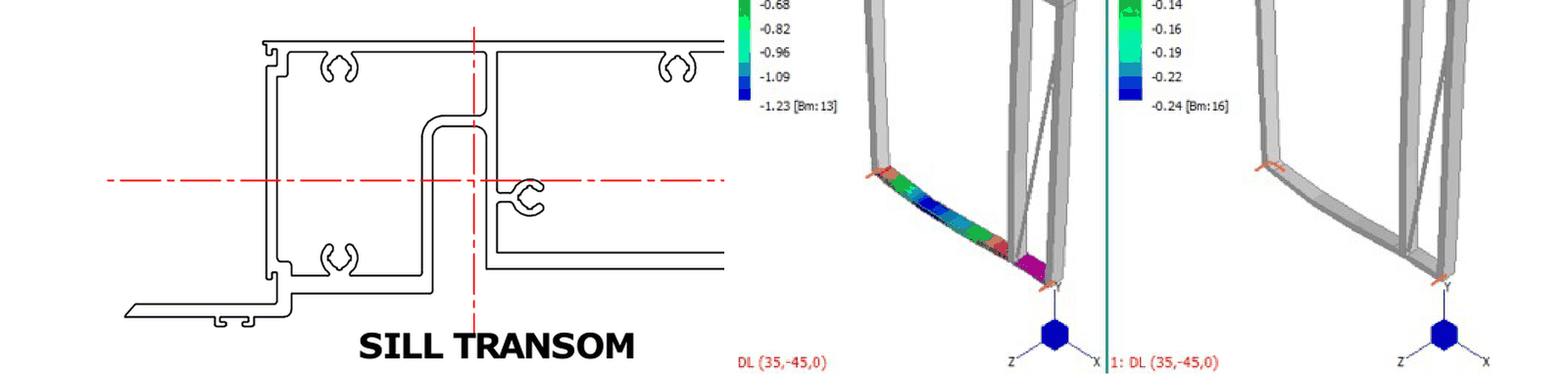
| 6 | Stack-Joint Sill Transom | Combined wind bending & dead load torsion | Combined stress check | Allowable stress limit | PASS | |
| 7 | Stack-Joint Sill Transom | Dead load vertical glass sag (≤ 3 mm) | 1.60 mm | 3.00 mm | PASS | |
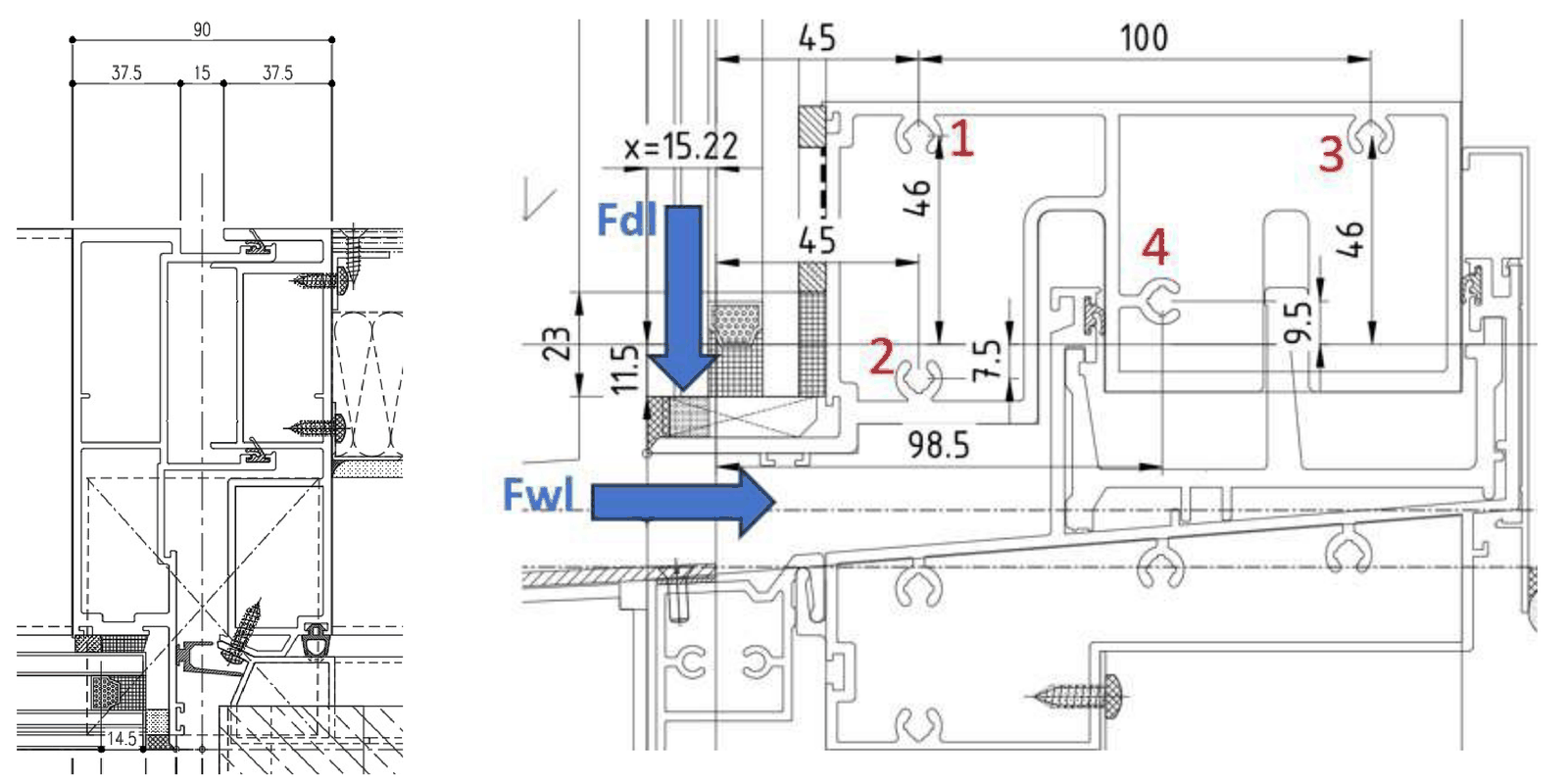
| 8 | Structural Silicone (SSG) | Minimum bite width per ASTM C1401 | 10.87 mm | 14.50 mm prov. | PASS | |
| 9 | Cast-in Channel Anchors | Combined tension + shear interaction (ETA) | Combined interaction check | 1.00 | PASS | |
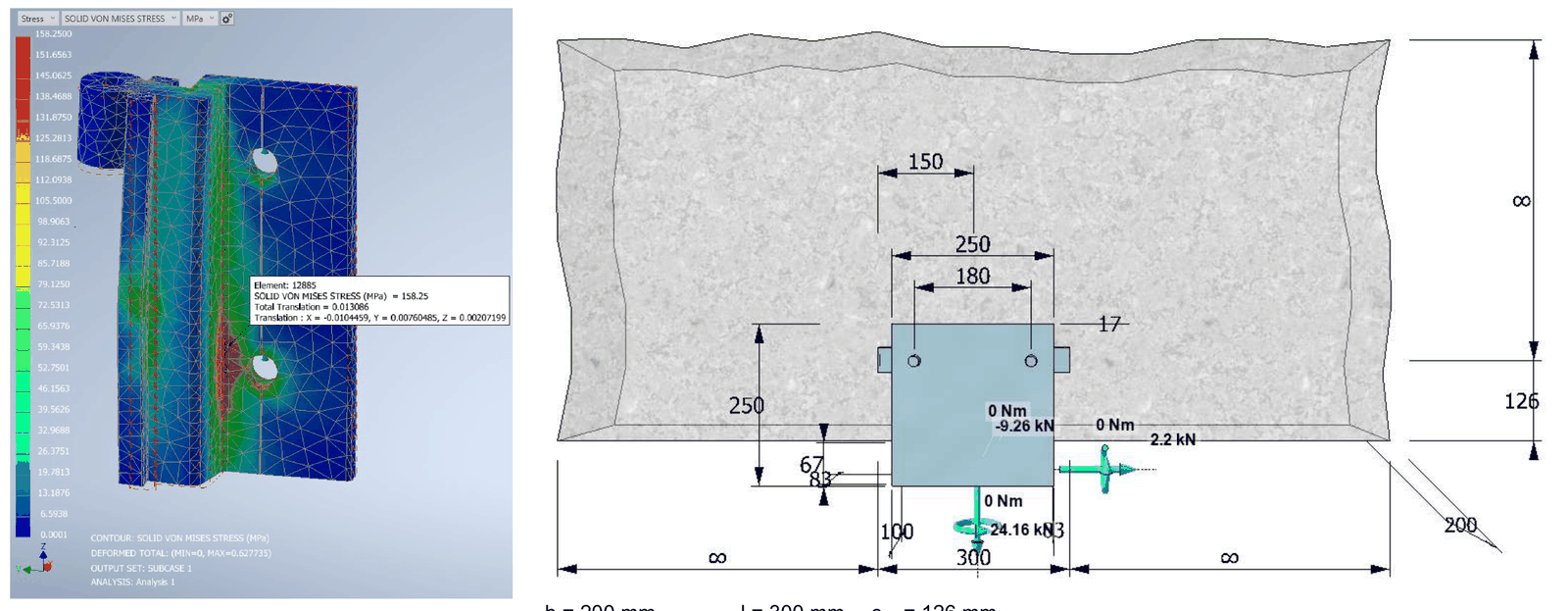
| 10 | Floor Slab Hook Bracket | 3D solid FEA Von Mises stress (6061-T6) | 158.25 MPa | 193.05 MPa | PASS | |
| 11 | Sill-to-Mullion Connection | Fastener group shear transfer (AAMA TIR-A9) | 1/4" Fastener group shear | Fastener group capacity | PASS |
6 Full-Scale Worked Calculation Sheets (Vector Engineering Calculation Pad)
Candidate-Authored Worked Calculation Dossier (Sections A–G)
Allowable Stress Design (ASD) • Service Wind Load ±1.25 kPa • Aligned with New Zealand Consenting (AS/NZS 1170.2, AS/NZS 1664.1 & NZS 4223)
Source: Commercial Office Package (128 pp.)
Status: APPROVED / FOR CONSENT
Status: APPROVED / FOR CONSENT
| PROJECT: | Commercial Office Headquarters — Bangkok | CALC SHEET NO.: | SK-CW-01 |
| SUBJECT: | Design Criteria, Wind Tunnel Actions & Governing Utilization Summary | CALC BY / VERIFIED: | F. Dela Cruz (Senior Engineer) |
| DESIGN BASIS: | AA ADM 2005 (ASD Service Wind) | *NZ Equiv: AS/NZS 1170.2:2021 & AS/NZS 1664.1:1997* | STATUS: | APPROVED / FOR CONSENT |
1.0 Design Criteria, Standards & Material Allowables
| SYMBOL | PARAMETER | VALUE | REF |
|---|---|---|---|
| WL | Design Wind Pressure (Type A) | 1.25 kPa | p. 17 |
| WL | Design Wind Pressure (Type B) | 1.00 kPa | p. 19 |
| ρ_al | Aluminium Density (6063/6061) | 2,710 kg/m³ | p. 10 |
| E_al | Aluminium Elastic Modulus | 69,600 MPa | p. 10 |
| σ_hs_s | Heat-Strengthened Glass Stress | 46.60 MPa | p. 10 |
| σ_ft_s | Fully Tempered Glass Stress | 93.10 MPa | p. 10 |
| G_pvb | PVB Interlayer Shear Modulus | 0.50 MPa | p. 10, 22 |
| F_sl | Structural Sealant Design Stress | 138.0 kPa | p. 84 |
| Δ_all | Mullion Lateral Deflection | L / 175 (25.10 mm) | p. 11, 47 |
| Δ_all_gl | IGU Glass Deflection Limit | min(L/90, 26.10 mm) | p. 22 |
| Δ_all_dl | Transom Setting Block Sag | min(L/300, 3.00 mm) | p. 11, 66 |
2.0 Wind Tunnel Pressure Distribution (Building Model)
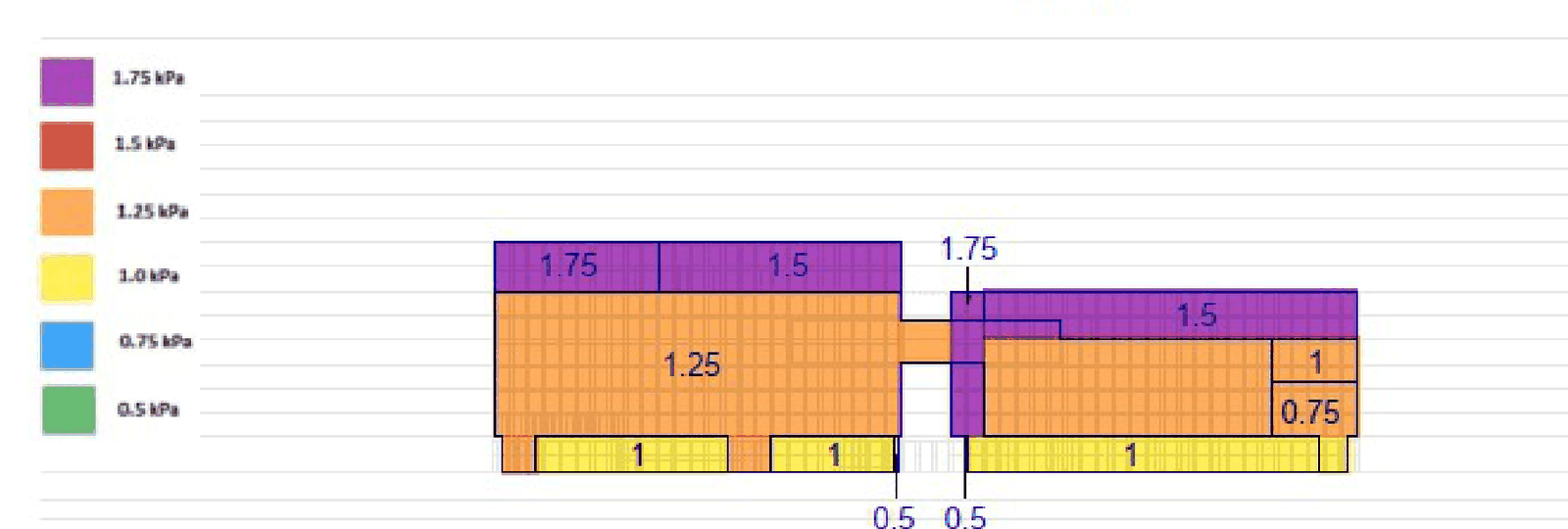
Figure 1.1 — Wind Tunnel Pressure Zone Map (Typical Panel Type A: WL = ±1.25 kPa; Type B: WL = ±1.00 kPa)
Source: Wind Tunnel Test Specification & Building Elevation Pressure Distribution Model (Report Section B, p. 17)
3.0 Governing Demand-Capacity Ratio (DCR) Verification Schedule — Allowable Stress Design (ASD)
| ITEM | STRUCTURAL ELEMENT | VERIFICATION PARAMETER | DESIGN METHOD / CODE | DEMAND (S_d) | CAPACITY (R_d) | DCR | STATUS | REF |
|---|---|---|---|---|---|---|---|---|
| 1 | Outer Laminated Glass (6HS+PVB+6HS) | Out-of-Plane Deflection | Strand7 FEA / ASTM E1300 | 24.03 mm | 26.10 mm (L/90) | 0.92 | OK | p. 13, 26 |
| 2 | Outer Laminated Glass (6HS+PVB+6HS) | Peak Surface Tensile Stress | Strand7 FEA / ASTM E1300 | 16.21 MPa | 46.60 MPa | 0.35 | OK | p. 13, 26 |
| 3 | Typical Male Mullion (Extrusion) | Combined Bending & Axial Tension | AA ADM 2005 (Eq. 3.4.1-1) | 0.905 + 0.024 | 1.00 | 0.93 | OK | p. 13, 47 |
| 4 | Intermediate Mullion Assembly | Combined Bending & Axial Tension | AA ADM 2005 (Eq. 3.4.1-1) | Interaction Ratio | 1.00 | 0.98 | OK | p. 13, 54 |
| 5 | Intermediate Mullion Assembly | Lateral Wind Deflection | Strand7 3D Frame Analysis | 19.70 mm | 25.10 mm (L/175) | 0.79 | OK | p. 13, 55 |
| 6 | Stack-Joint Sill Transom | Bi-Axial Bending Interaction | AA ADM 2005 Bi-Axial Flexure | 0.70 + 0.15 | 1.00 | 0.82 | OK | p. 14, 64 |
| 7 | Stack-Joint Sill Transom | Setting Block Dead Load Sag | Elastic Setting Block Flexure | 1.60 mm | 3.00 mm (L/300 limit) | 0.53 | OK | p. 14, 66 |
| 8 | Structural Silicone Joint (SSG) | Dynamic Wind Glazing Bite | ASTM C1401 Trapezoidal Rule | 10.87 mm req. | 14.50 mm provided | 0.75 | OK | p. 14, 84 |
| 9 | Top Hook Bracket (6061-T6 Extrusion) | Peak Von Mises Stress | Autodesk Nastran 3D Solid FEA | 158.25 MPa | 193.05 MPa | 0.79 | OK | p. 14, 90 |
| 10 | Cast-In Channel Anchorage | Triaxial Tension & Shear Interaction | EN 1992-4 / ETA-09/0339 | (N/NRd)^1.5 + (V/VRd)^1.5 | 1.00 | 0.99 | OK | p. 14, 104 |
| 11 | Transom-to-Mullion Fasteners | Peak Resultant Screw Shear | AAMA TIR-A9 Fastener Group | 3.05 kN | 3.16 kN per screw | 0.97 | OK | p. 15, 115 |
NOTE: Serviceability design per ASD methodology (Service Wind Load WL = ±1.25 kPa). All components verified adequate (DCR ≤ 1.00).
Consenting Alignment: AS/NZS 1170.2, AS/NZS 1664.1 & NZS 4223